UPDATES & NEWS
Guest Blog: Un legado que se resiste a quedarse en el pasado / A Legacy That Refuses to Stay in the Past
Cómo un grupo de exfuncionarios peruanos de USAID decidió que 60 años de conocimiento no podían perderse / How a Group of Former Peruvian USAID Staff Decided 60 Years of Knowledge Couldn't Be Lost
By: Impacto USAID Perú
Imagina los productos de 60 años de trabajo en el Perú: miles de informes, evaluaciones, estudios técnicos, fotografías y lecciones aprendidas que ilustran décadas de cooperación apoyada por USAID en el país, la cual estaba a punto de llegar a su fin. ¿Qué se podía hacer?
Cuando compartir el conocimiento se volvió urgente
A principios de 2025, un grupo de funcionarios locales de USAID (Foreign Service Nationals, FSNs) decidió que no permitiría que el conocimiento contenido en esos materiales desapareciera. El equipo de Monitoreo, Evaluación y Aprendizaje (MEL) de USAID/Perú impulsó un esfuerzo voluntario que reunió a colegas de distintas áreas de la Misión para emprender una tarea que parecía sencilla, pero no lo era: rescatar, preservar, honrar y compartir la memoria de más de seis décadas de trabajo. Así nació la iniciativa Legacy Project.
El equipo de Legacy Project reunió a colegas comprometidos con compartir conocimientos valiosos sobre el desarrollo. Juntos identificaron, revisaron, organizaron y catalogaron materiales públicos que abarcan décadas de trabajo en desarrollo apoyado por USAID en el
Perú.
Después del cierre de operaciones de USAID/Perú, Legacy Project evolucionó hasta convertirse en una iniciativa voluntaria e independiente, liderada por seis exfuncionarios locales (FSNs) con
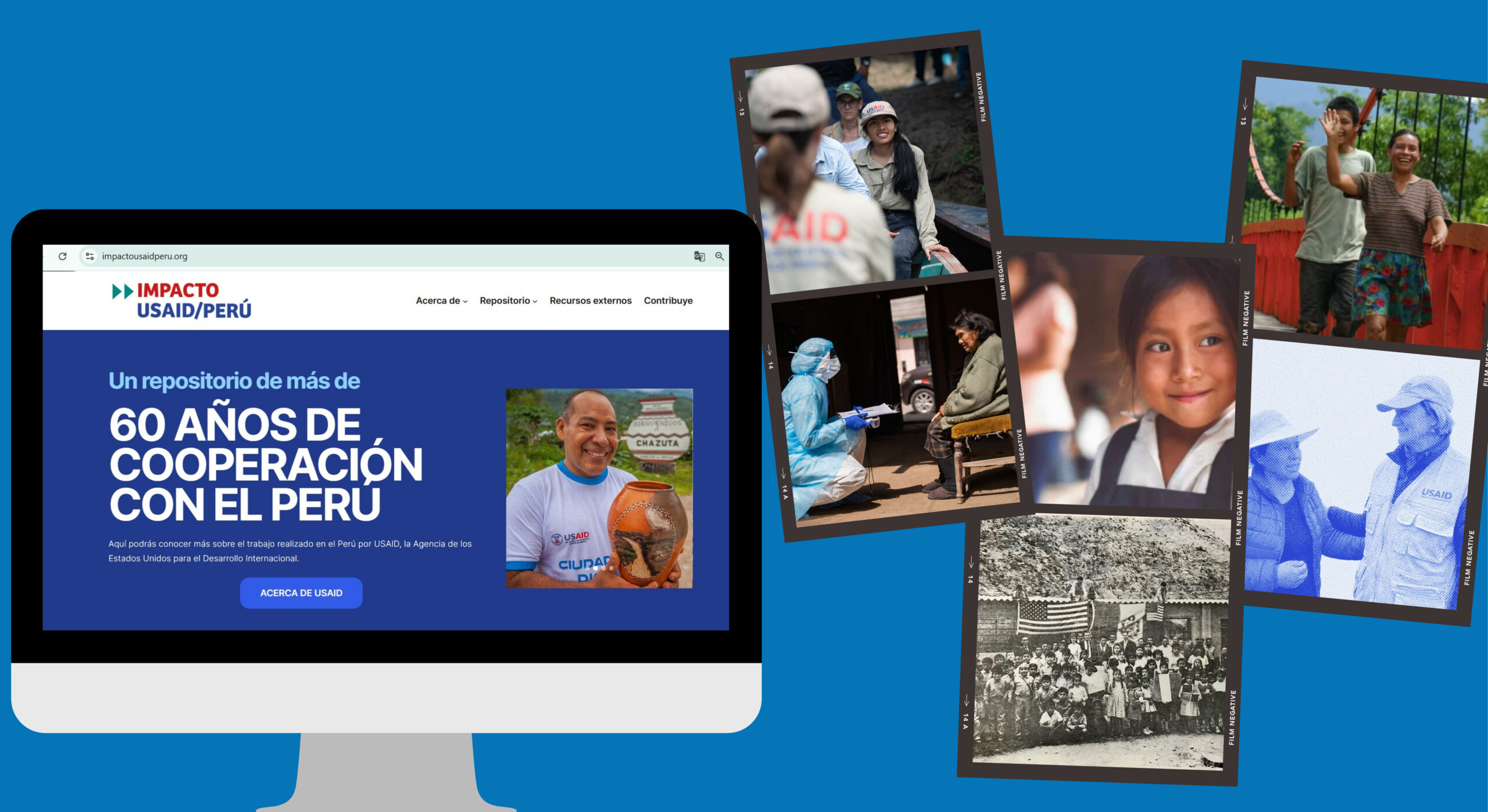
experiencia en planificación, comunicaciones, monitoreo, evaluación y aprendizaje, y áreas técnicas. El equipo continuó realizando las principales tareas, que requerían un trabajo intensivo, incluido el diseño, la implementación y el lanzamiento del sitio web de Legacy Project, denominado Impacto USAID Perú. Junto con otros ex-FSNs, el equipo financió el alojamiento de www.impactousaidperu.org, con el objetivo de reunir el conocimiento recopilado en un solo lugar y hacerlo accesible a quienes lo necesiten en el Perú, ahora y en el futuro.
Impacto USAID Perú: de la memoria al conocimiento útil
Pero ¿para qué sirve realmente, más allá de preservar la historia?
Actualmente, la plataforma reúne documentos públicos sobre la historia de la cooperación para el desarrollo entre Estados Unidos y el Perú y aproximadamente 150 proyectos apoyados por USAID. Estos documentos, anteriormente dispersos en numerosos archivos físicos y digitales, ahora son más accesibles y útiles.
La colección también muestra cómo la cooperación para el desarrollo financiada por Estados Unidos se concretó mediante alianzas con personas y actores peruanos. Las experiencias recogidas en evaluaciones, informes finales, estudios técnicos y otras publicaciones nos muestran qué funcionó, por qué funcionó y qué obstáculos surgieron, brindándonos conocimientos que permiten aprovechar esta evidencia y adaptar las lecciones del pasado para diseñar mejores soluciones a los desafíos actuales.
La información está dirigida a todas las personas interesadas en el desarrollo del Perú (por eso, su idioma principal es el español), incluidas instituciones públicas que buscan fortalecer sus programas, universidades y centros de investigación que estudian experiencias de desarrollo,
organizaciones de la sociedad civil, organizaciones del sector privado, estudiantes y profesionales.
Un proyecto que sigue creciendo
Impacto USAID Perú no es un archivo estático; es un proyecto vivo que continúa mejorando su organización para facilitar la búsqueda de información.
Y hay algo importante: todavía no todo el conocimiento generado durante estos 60 años está disponible en la plataforma. Muchos informes, fotografías, videos y otros materiales permanecen dispersos en sitios web institucionales, repositorios de socios implementadores y otras fuentes de acceso público.
Por eso, el sitio web cuenta con una sección denominada «Contribuye», que invita a personas y organizaciones a ayudar a identificar y compartir materiales públicos que puedan enriquecer este repositorio colectivo. Cada contribución, por pequeña que parezca, ayuda a que más personas aprendan de experiencias pasadas para construir nuevas soluciones.
Un legado que todavía puede inspirar
Esta iniciativa no se creó solamente para mirar hacia atrás. Se creó para mirar hacia adelante.
Todo ese conocimiento —las experiencias, los logros, los errores y las lecciones aprendidas durante más de 60 años— puede seguir inspirando a quienes trabajan por el desarrollo en el Perú y en el mundo. Impacto USAID Perú nació de una convicción sencilla: el conocimiento
compartido vale más. Aquello que alguna vez contribuyó a generar cambios positivos puede seguir haciéndolo, siempre que esté al alcance de quienes puedan beneficiarse de él.
Preservar nuestro legado no consiste únicamente en proteger y honrar el pasado. Se trata de darle la oportunidad de seguir generando impacto.
¿Conoces informes, publicaciones u otros materiales públicos de proyectos de USAID/Perú que puedan enriquecer esta colección? Puedes contribuir a través de la plataforma Impacto USAID Perú.
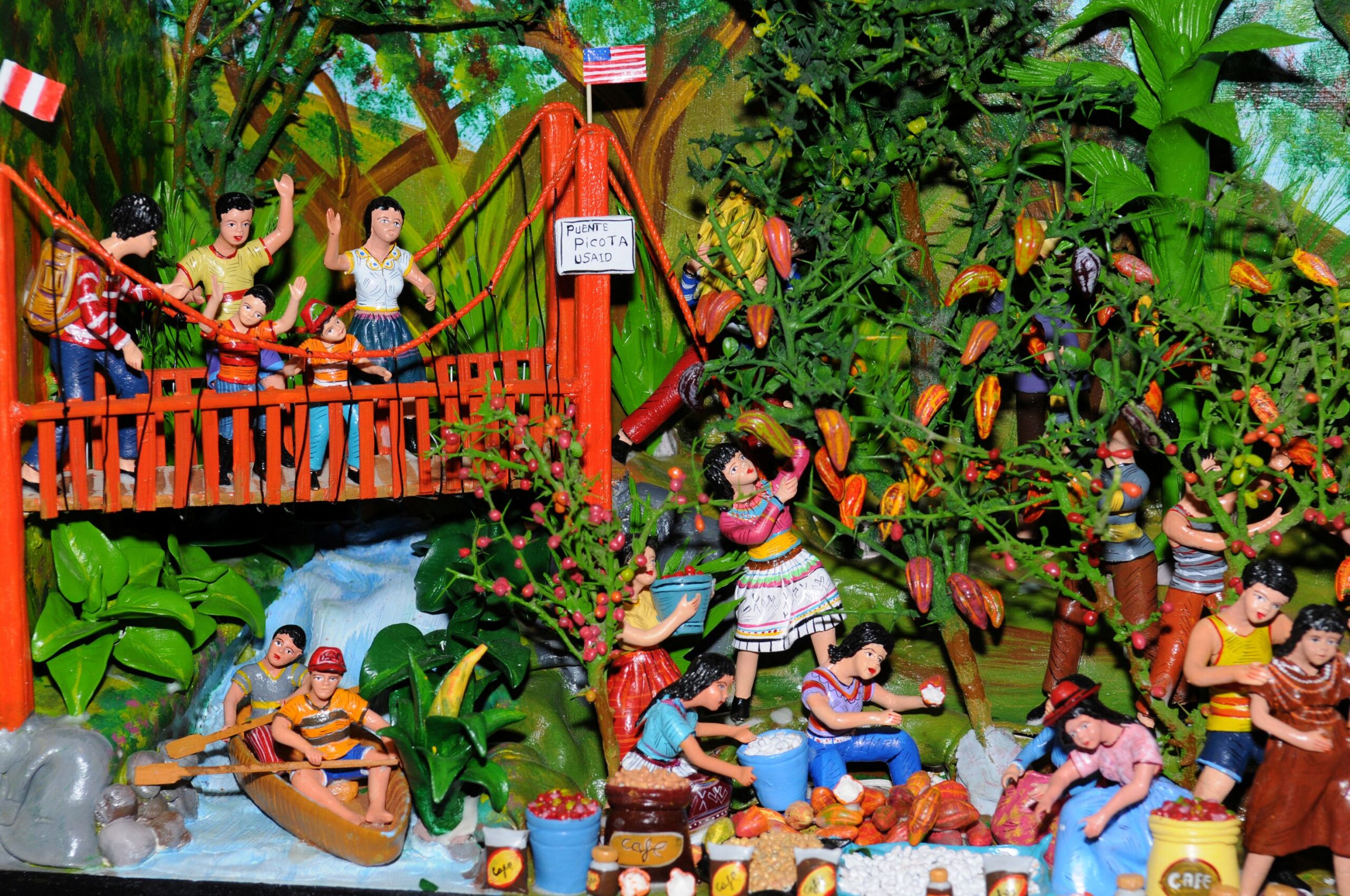
Detail of an Ayacucho retablo, a traditional Peruvian folk-art box featuring three-dimensional figures, created to commemorate 50 years of USAID in Peru. The artwork illustrates USAID’s impact on rural connectivity and development in the Peruvian Amazon.
Picture the products of 60 years of work in Peru: thousands of reports, evaluations, technical studies, photographs, and lessons learned illustrating decades of USAID-supported cooperation in Peru, which was about to come to an end. What could be done?
When Sharing Knowledge Became Urgent
In early 2025, a group of local USAID staff (Foreign Service Nationals-FSNs) decided they weren’t going to let the knowledge contained in those products disappear. A volunteer effort was initiated by USAID/Peru’s Monitoring, Evaluation, and Learning (MEL) team, which brought
together colleagues from across the mission to do something that sounded simple but wasn’t: rescue, preserve, honor, and share the memory of more than six decades of work. In the process, the Legacy Project initiative was born.
The Legacy Project team brought together colleagues committed to sharing valuable
development knowledge. Together, they identified, reviewed, organized, and cataloged public materials spanning decades of USAID-supported development work in Peru.
After USAID/Peru ceased operations, the Legacy Project evolved into a voluntary and
independent initiative led by six former FSNs with backgrounds in planning, communications, MEL, and technical areas. The team continued the labor-intensive core tasks, including designing, deploying, and launching the Legacy Project’s website, called Impacto USAID Perú. Together with other ex-FSNs, the team financed the hosting of www.impactousaidperu.org, with the goal of bringing the collected knowledge together in one place and making it accessible to those in Peru who need it, now and in the future.
Impacto USAID Perú: From Memory to Useful Knowledge
So what’s it actually for, beyond preserving history?
Currently, the platform brings together public documents about the history of U.S.–Peru development cooperation and approximately 150 USAID-supported projects. Previously scattered across numerous physical and digital files, these documents are now more accessible
and useful. The collection also illustrates how U.S.-funded development cooperation took shape through partnerships with Peruvian individuals and stakeholders. The experiences gathered through evaluations, final reports, technical studies, and other publications show us what worked, why it worked, and what obstacles arose, giving us the knowledge to build on this evidence and adapt past lessons to design better solutions for today’s challenges.
The information is intended for anyone interested in Peru’s development (which is why its primary language is Spanish), including public institutions looking to strengthen their programs, universities and research centers studying development experiences, civil society organizations, private-sector organizations, students, and professionals.
A Project That Keeps Growing
Impacto USAID Perú is not a static archive; it’s a living project that keeps getting better
organized so it’s easier to search.
And here’s something important: not all of the knowledge from these 60 years is on the
platform yet. Many reports, photographs, videos, and other materials remain dispersed across institutional websites, implementing-partner repositories, and other open sources.
That’s why the website has a Contribute section, inviting individuals and organizations to help
identify and share previously publicly available materials that could enrich this collective repository. Every contribution, no matter how small it seems, helps more people learn from past experiences to build new solutions.
A Legacy That Can Still Inspire
This initiative wasn’t built just to look backward. It was built to look forward.
All of that knowledge – the experiences, the wins, the mistakes, and the lessons learned over more than 60 years – can keep inspiring the people working on development in Peru and around the world. Impacto USAID Perú was born from a simple conviction: shared knowledge is
worth more. What once helped drive positive change can keep driving it, as long as it’s accessible to those who can benefit from it.
Preserving our legacy isn’t just about protecting and honoring the past. It’s about giving it the chance to keep making an impact.
Do you know of any public USAID/Peru reports, publications, or other project materials that could strengthen this collection? You can contribute through the Impacto USAID Perú platform.
Related Articles:

Comedy Show for Foreign Aid Resilience
UPDATES & NEWSPhoto © Andrew Cohen, used with permission.On a frigid winter evening in...

One Year On: Co-Signed Press Release
UPDATES & NEWSPress Release: February 2, 2026For Immediate ReleaseFebruary 2, 2026Press...

Guest Blog: Kent Benson
UPDATES & NEWSBy: Kent BensonKent Benson was the Division Chief for Overseas Management at...