UPDATES & NEWS
Understanding U.S. Foreign Assistance: Lessons from a Spring Semester at USC
Reflections from a five-part conversation series in Washington, DC
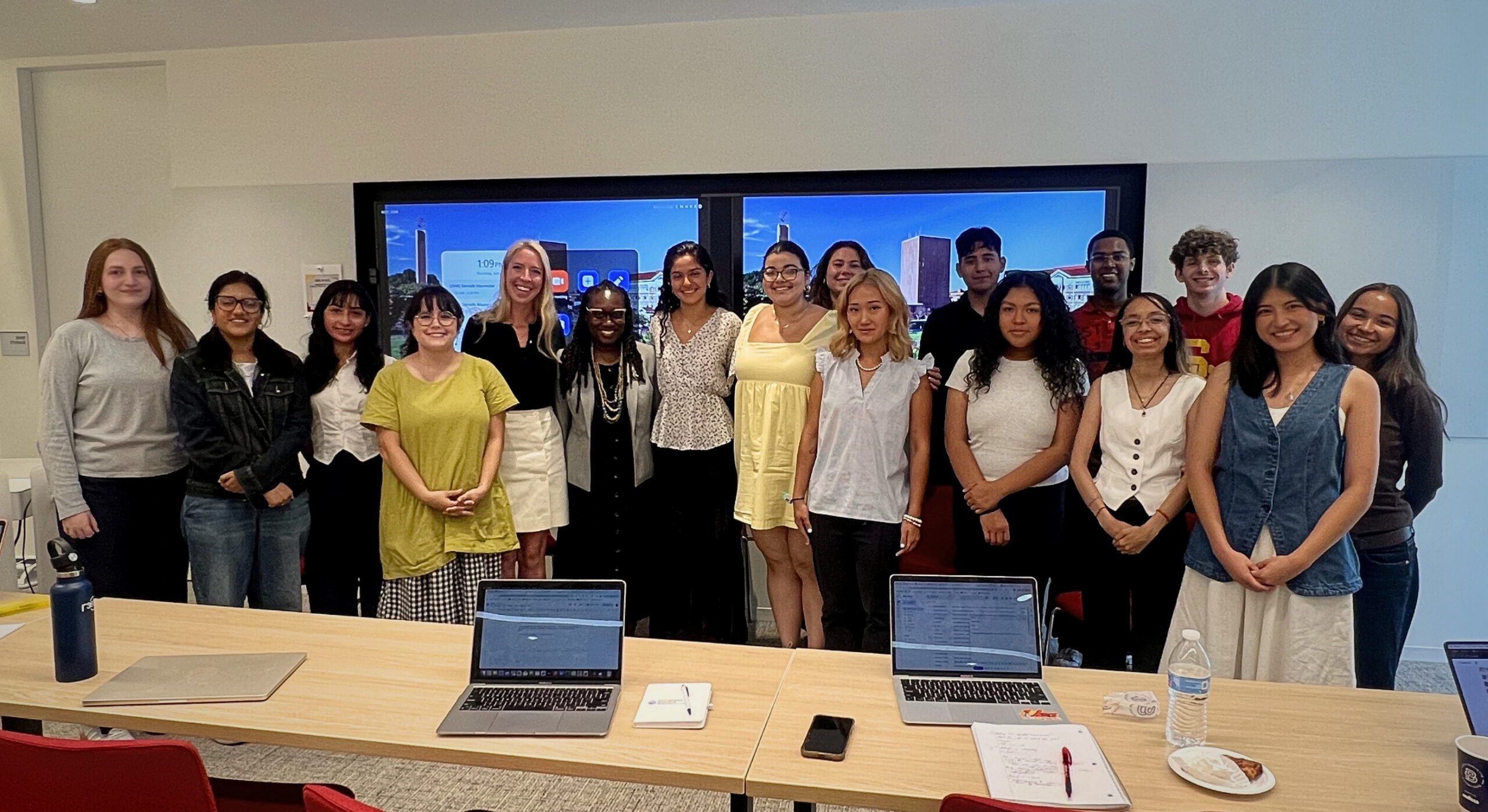
This spring, OneAID organized a series of conversations for a cohort of University of Southern California undergraduates at the USC Capital Campus in Washington, DC. The students were enrolled in Professor Iva Bozovic’s Political Economy course on the United States’ role in international development, with a focus on trade policy, development and climate finance, and foreign aid.
Over five sessions in late May and June, students met with practitioners spanning government, multilateral institutions, NGOs, and advocacy organizations – people with firsthand experience navigating the US foreign assistance system as it exists today, and as policymakers reshape it.
The series was organized in partnership with the Aid Transition Alliance, a nonpartisan group working to rebuild the global development ecosystem through education, knowledge preservation, and support for professionals navigating career transition.
Five Conversations, One Throughline
The sessions spanned the full arc of US foreign assistance from its institutional foundations to its uncertain future:
The series opened with two sessions on May 26 – one focused on the foundations of US foreign assistance, drawing on practitioners with experience across USAID’s humanitarian assistance and development work, alongside voices from Aid on the Hill and a candidate for the Maryland House of Delegates; the other examining current approaches at the Department of State, with current and former officials from State.
Three sessions followed on June 11 including a conversation on development and climate finance with representatives from UNDRR, the World Bank Fund for Responding to Loss and Damage, and the Atlantic Council Africa Center; a session with practitioners from Mercy Corps and International Justice Mission on the realities facing NGOs and local implementing partners; and a closing conversation on the future of foreign assistance, bringing together voices from the Movement for Community-Led Development, Our USAID Community, the Modernizing Foreign Assistance Network, the Professional Society for Health Economics and Outcomes Research, and the U.S. Global Leadership Coalition.
Across all five sessions, the conversations kept returning to the same core tensions. How do practitioners balance political, economic, and strategic pressures while still delivering real impact on the ground? How are decisions actually made across agencies, and where does coordination break down during implementation? And how can foreign assistance models do a better job of centering ownership, funding, and decision-making authority with local organizations that have the capacity to lead but often lack the resources to do so? The later sessions pushed further into how development and climate finance will evolve, how private sector engagement is reshaping programming priorities, and what the next generation of practitioners should actually prepare for.
Several conversations touched on the disruption to longstanding foreign assistance institutions and what might come next – including newer models of climate finance, the growing role of the private sector in development funding, and the increasing need for local actors to have a real seat at the table rather than simply implementing decisions made elsewhere.
A Sector in Flux and a Generation Still Showing Up
It would be easy to read the current moment in foreign assistance as one of retreat. Policymakers are reorganizing or dismantling long-standing institutions, funding models are shifting, and many practitioners are themselves navigating real uncertainty about what comes next.
But what stood out across these conversations was something more hopeful: a room full of students not asking whether the work is worth doing – but asking sharp, serious questions about how to do this work better. The next generation entering this field isn’t waiting for the dust to settle. They’re already thinking about how to build something more effective, more accountable, and more responsive to the people foreign assistance is meant to serve.
That’s the role OneAID is glad to play, connecting those already in this space with the people who will shape its next chapter, and helping make sure that as the vehicles for delivering foreign assistance change, the commitment to doing it well doesn’t waver.
Related Articles:
Foreign Service Day
UPDATES & NEWSFlag Day 2024, Foreign Service Officers recieve the flag of the country of their...
Enrich Book Talk
UPDATES & NEWSOn the evening of April 15, 2026, over 300 people packed the Connecticut Avenue...
Guest Blog: Yasmina Sarhrouny
UPDATES & NEWSBy: Yasmina SarhrounyYasmina Sarhrouny is a senior governance, gender, and...