
UPDATES & NEWS
Honoring Those Who Served Abroad
The People Who Carried America's Mission Around the World

Flag Day 2024, Foreign Service Officers recieve the flag of the country of their first assignment.
Every May 1, the United States observes Foreign Service Day, a moment to recognize the people who have dedicated their careers to representing America’s interests around the world, especially those who lost their lives in service. This year, OneAID joins that recognition with a special reflection on the Foreign Service Officers (FSO) and Foreign Service National (FSN) staff who served through USAID, and the extraordinary difference they made.
What Is the Foreign Service?
The U.S. Foreign Service is the professional corps of American diplomats, development officers, and specialists who staff U.S. embassies, consulates, and missions abroad. Established by the Foreign Service Act of 1980, it is one of the most demanding career paths in government service – requiring geographic mobility, language proficiency, and the ability to operate effectively in challenging and often dangerous environments.
Foreign Service members take on postings in places where conditions can be austere, political situations volatile, and the stakes for U.S. interests extremely high. They negotiate with foreign governments, manage aid programs, promote American trade, and respond to crises while representing the United States with professionalism and integrity. They also support American citizens abroad, including during personal emergencies, natural disasters, and political crises.
Five Agencies, One Foreign Service System
What many Americans don’t know is that the U.S. Foreign Service is not a single agency, it spans five federal departments and agencies, each with its own mission and corps of officers operating under the Foreign Service Act:
-
- Department of State: The flagship diplomatic corps, staffing embassies worldwide and conducting U.S. foreign policy. This includes managing programs that support law enforcement and counter narcotics, promote educational and cultural exchange, protect refugees, and promote human rights and providing consular services..
- U.S. Agency for International Development (USAID): Leading U.S. foreign assistance, development and humanitarian programs.
- Department of Agriculture (USDA / Foreign Agricultural Service): Promoting U.S. agricultural trade and food security abroad.
- Department of Commerce (U.S. Foreign Commercial Service): Expanding U.S. export opportunities and commercial interests.
- Broadcasting Board of Governors / U.S. Agency for Global Media (USAGM): Overseeing international broadcasting, including Voice of America.
Each agency draws on the shared Foreign Service personnel system but brings a distinct mandate and skill set to the broader mission of U.S. engagement abroad.
What Made USAID’s Foreign Service Unique
Among the five agencies, USAID’s Foreign Service stood apart in both its mission and its people.
Where State Department officers were primarily diplomats skilled in negotiation, protocol, political and economic analysis and consular services, USAID Foreign Service Officers (FSOs) and Foreign Service Nationals (FSNs) were development and humanitarian practitioners. They brought technical expertise that no other agency could match: economists designing structural reform programs, public health officers managing disease outbreak responses, agronomists boosting production in food insecure regions, engineers overseeing infrastructure construction, education experts increasing access to quality education opportunities, democracy specialists building civil society institutions in post-conflict countries and humanitarians providing life-saving food and medical aid following natural disasters and crises.
USAID FSOs were trained not just to talk about development, they were expected to deliver it. They managed multi-million dollar program portfolios, adapted strategies in real time to shifting conditions, and conducted rigorous monitoring to ensure aid reached intended recipients. Many spent years, sometimes careers, in the same regions, developing deep relationships with local governments, civil society, and communities that no short-term assignment could replicate.
USAID’s Foreign Service brought a rare combination of skills that few government agencies could match. Their sectoral technical expertise spanned health, agriculture, economic growth, democracy and governance, education, humanitarian response, and environmental protection. They were also seasoned program and financial managers, responsible for designing, implementing, and overseeing large-scale programs with rigor and accountability. Equally important was their commitment to partnership and capacity-building, working alongside host-country governments and institutions to strengthen local systems rather than simply deliver services. As one former FSO, Jaime, reflected “We worked to create opportunities for people to live safer, healthier, more prosperous lives. And in doing so, in creating opportunities for children to receive a quality education, for mothers to receive quality, evidence-based healthcare for themselves and their children, for youth to have meaningful opportunities for civic engagement or a decent shot at employment, we improved the image of the United States and worked to reduce the pull of extremist groups.”
When crises struck, they mobilized rapidly in disaster and conflict settings to provide life-saving assistance. Underpinning all of it was a sophisticated political economy analysis and a hard-won understanding of local contexts that allowed them to design programs capable of surviving political transitions, bureaucratic obstacles, and shifting priorities on the ground.
The Role USAID’s Foreign Service Played
USAID Foreign Service professionals served as the operational backbone of U.S. foreign assistance, and in doing so, they advanced both humanitarian principles and strategic U.S. interests.
On the humanitarian side, they led complex responses to some of the world’s worst crises: preventing famine in the Horn of Africa, Ebola outbreaks in West Africa, the earthquakes in Haiti and Nepal, and refugee flows from Syria and South Sudan. Their work saved millions of lives and reflected America’s enduring commitment to alleviating suffering wherever it occurs.
On the strategic side, USAID’s Foreign Service was an indispensable tool of U.S. foreign policy. Development programs helped stabilize fragile states, reduce the conditions that breed extremism, strengthen democratic governance, and build economic partnerships that benefited American business and global markets. In many countries, USAID programs were among the most visible and respected symbols of U.S. engagement, more tangible to ordinary citizens than any diplomatic statement.

The USAID Memorial Wall at the State Department in Summer 2025.
A Legacy Worth Honoring
On this Foreign Service Day, we honor the thousands of USAID Foreign Service professionals, past and present, who gave years, and in some cases their lives, to this work. They served in hardship posts far from home. They built programs that outlasted their assignments. They trained the next generation of development professionals, in the United States and in the countries they served.
Central to that legacy is the USAID Memorial Wall, a solemn tribute to all those who lost their lives in service to the agency’s mission. Susan Reichle, who served as USAID Counselor from 2013 to 2017, captured its meaning precisely: “Foreign Service Day is to honor all of those who made the ultimate sacrifice while serving their country, just like the military. We honor on our memorial wall not just Foreign Service Officers, but all who served for USAID. A special plaque for partners killed while implementing USAID was hung during our 2016 ceremony.” That inclusion of the local partners who worked alongside USAID in the field reflects the full human cost of development work done in dangerous places.
When USAID was displaced from its longtime home at the Ronald Reagan Building in Washington, D.C., the Memorial Wall was rescued and relocated to the Main State Department building, where it stands today as a permanent reminder that development and humanitarian work, like diplomacy and military service, carries real risk and sacrifice.
That legacy deserves to be remembered, honored, and continued.
Related Articles:
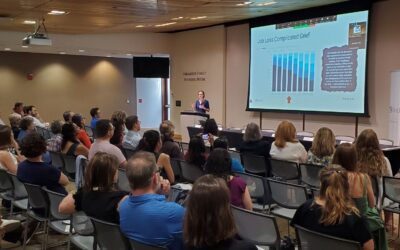
Survey Presentation and Panel
UPDATES & NEWSOn June 11, OneAID hosted The Impacts of USAID’s Dismantling on its Workforce...
U.S. International Development and Foreign Aid Post-2025: A Graduate Seminar Blog
UPDATES & NEWSBy: Flory Abiwawanti, Anna Grigovera, Makynzie Horvath, Shamaim Kirmani,...
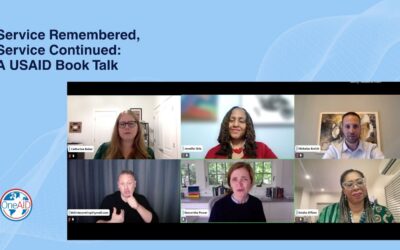
Service Remembered, Service Continued
UPDATES & NEWSOn May 11th, OneAID hosted over 500 people from around the world for a webinar...