UPDATES & NEWS
Guest Blog: The Work That Doesn’t Simply Stop
A perspective on disruption, resilience, and life after USAID
By: Yasmina Sarhrouny
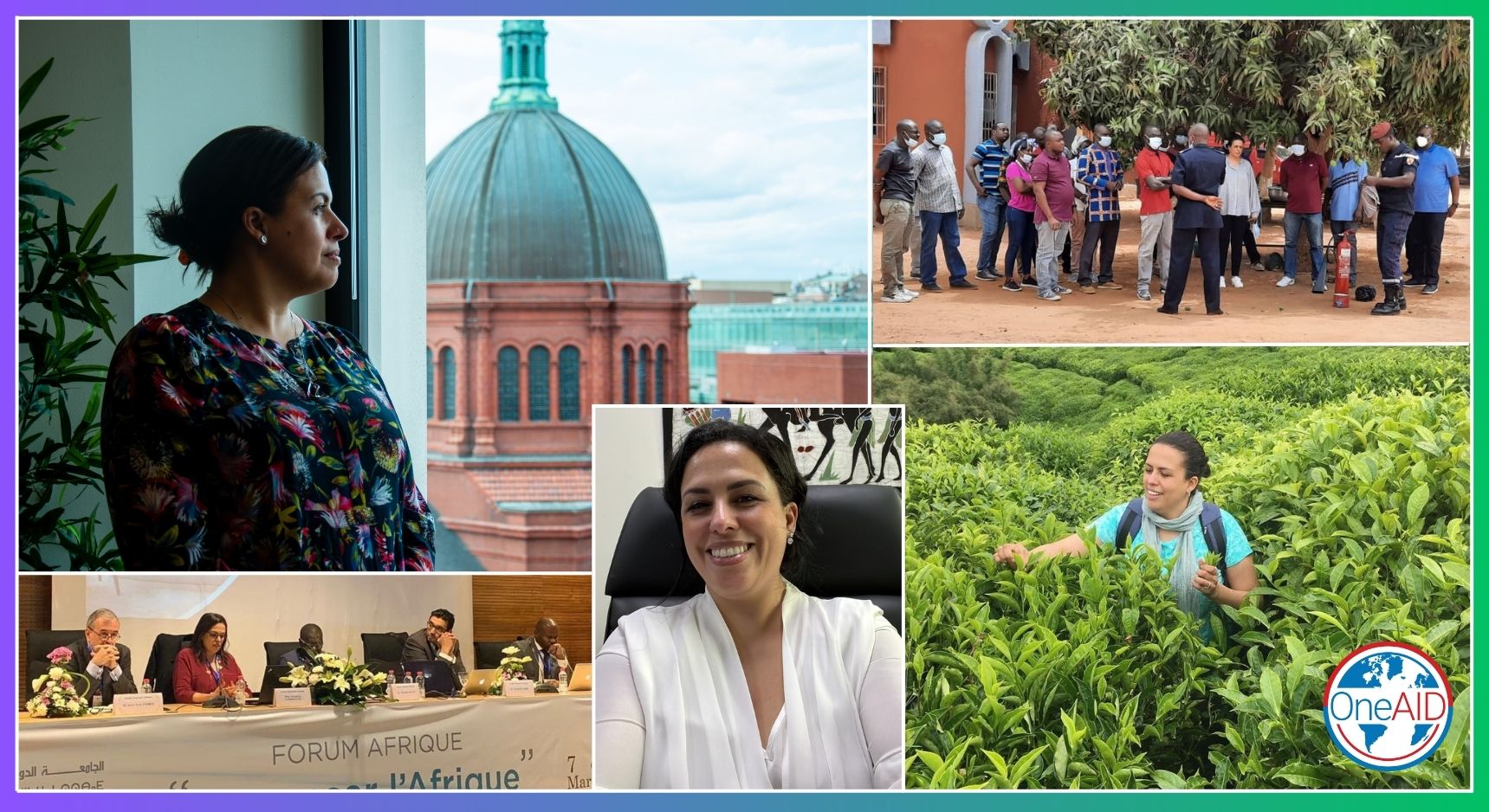
Yasmina Sarhrouny is a senior governance, gender, and resilience expert with over 20 years of experience across Africa and the Middle East and North Africa. She has led large-scale, USAID-funded programmes with a focus on inclusive governance, gender equality, and community resilience, and currently works at the intersection of research, policy, and practice in Morocco.
I remember the exact moment. I was in Fes for my nephew’s wedding ceremony when the email notification buzzed. Then the calls. The texts. I couldn’t walk away. Everyone around was joyous. I smiled and mingled, with a lump in my stomach and my hands clutching my phone in disbelief.
A few days before, fragments of partial information, moving faster than clarity started trickling. A colleague forwarding an email. Another asking if anything had been confirmed. A confusing call with headquarters. Something about DEI. Then the stop-work order hit. Within hours, what had been rumor became instruction. And within days, what had taken years to build began to shake. What followed was not simply stopping projects. It was trying to halt something that, by its nature, does not stop sharply.
As implementing partners, many of us found ourselves in the same position at the same time, responsible for translating decisions we had not made into actions that would affect teams, partners, and communities who depended on us for clarity. There were no instructions for that.
The first days were consumed by confusion. What exactly did “stop” mean in operational terms? What could still be communicated? What had to cease immediately? What were the legal implications? The ethical ones? The HR ones?
Teams looked to us, chiefs of party (COPs) and team leaders, for answers we did not have. Partners reached out, asking what would happen next. And communities, the ones least informed and most affected, were suddenly out of reach.
We tried to preserve what could be preserved. We thought about legacy, not as a retrospective exercise, but as an urgent operational task. What could be transferred? What needed to be documented? What relationships needed to be protected?
One year after the dismantling of USAID, it is important to say this plainly: what was lost was not just funding or programs. It was trust.
In northern Morocco, I was working on a preventing/countering violent extremism (P/CVE) project involving academia and youth-serving organizations navigating complex local realities where questions of identity, opportunity, and resilience were not abstract debates, but lived experiences.
These were not organizations waiting to be empowered. They were already embedded in their communities, working at the intersection of prevention, social cohesion, and positive youth development. They mentored young people, facilitated dialogue, and, in quiet but meaningful ways, contributed to reducing risks before they escalated. Our role was not to lead, but to strengthen, document, learn and eventually scale.
We worked with them to consolidate their institutional capacity, connect them with regional partners, and support the kinds of relationships that make systems more responsive over time. It was slow but critical work. The kind that rarely produces immediate visibility but builds something more durable: trust.
The USAID freeze hit hard, but the ecosystem did not collapse overnight. It did weaken, however: Funding streams dried up. Technical assistance stopped. Structured spaces for cooperation narrowed. And what had taken years to build, trust between actors who do not naturally trust each other, lost part of the architecture that sustained it.
Yet the organizations adapted. They scaled down activities, redefined priorities, leaned on each other, and found salvatory funding. They continued to show up for their communities, even as the system around them receded. But their resilience should not be mistaken for immunity. Despite the survival they did lose what could not be sustained, what could not be deepened, what could not be scaled because support was withdrawn so abruptly.
For me, my former implementing partners, my community, USAID’s dismantling was a structural rupture that reflected a broader political choice: to treat long-term development, prevention, and partnership as optional rather than essential. To underestimate the degree to which stability is built through precisely the kind of work that is easiest to dismantle because its results are not immediate. It felt like a betrayal of the mission. And we lost trust.
And yet, not everything was destroyed. The people, and the passion, did not disappear. The skills developed over years are alive and well. The values remain. The commitment to inclusion, to dignity, to locally anchored resilience remains. Most importantly, the relationships that were fostered through hard work and dedication remain.
Between local organizations that learned how to collaborate. Between practitioners who found ways to support each other when formal structures collapsed across continents, countries and languages. Between communities who, long accustomed to navigating uncertainty, continued to adapt.
These are not assets that can be dismantled by an executive order. These are human connections, mycelia-like in their shape and reach, that held us together and kept us afloat in these unprecedented, distressing times.
For some, the path forward has taken shape. For others, it remains uncertain. This has not been a linear transition, because it was not an ordinary disruption. An entire ecosystem contracted at once. Careers built over decades were suddenly untethered from the structures that had sustained them. And the hard-earned expertise developed through years of work does not always translate easily into systems that do not yet know how to absorb it.
I went through cycles of grief, and I might still be going through one. Through countless applications to ill-fitting jobs, and through self-doubt. But I never doubted the mission. It lives in how we work, how we show up, and whether we continue to apply what we know in ways that remain useful, even when the structures around us change.
My structure became the halls of the faculty of letters and humanities. I went back to school to pursue a PhD in social sciences. To learn, to share, to influence, to tell the stories, to convert, to document, and to feel relevant again, I assume.
Around me, friends and former colleagues are recovering in local NGOs, mission-driven for-profits and grassroot organizations. We talk, we think and we discuss what should endure, what should evolve, and what should not be repeated. My heart swells with gratitude for those who are willing to keep doing this work, even when the path is less defined.
What was built still exists in organizations that grew stronger. In relationships that are still standing after the structures around them crumbled. Because in the end, we were never just implementing programs for USAID: we were building the conditions for something to last beyond, and despite, international development assistance.
Read other guest blogs in our series:
Sembrando Esperanza hasta el último día / Planting Hope Until the Last Day by Esdras J. López Orellana
When the Lights Went Out at USAID by Ian Kakuba
My Job Didn’t Matter. I Did. by Kent Benson
Related Articles:
Survey: Impact of Dismantling of USAID
UPDATES & NEWSOneAID is partnering with Jaime Oberlander, a former USAID Foreign Service...
Guest Blog: Esdras López Orellana
UPDATES & NEWSBy: Esdras J. López OrellanaEsdras J. López Orellana es un profesional sénior en...

Still Serving Event
UPDATES & NEWSOn Sunday afternoon, March 8, over 50 adults and their families gathered at The...